Shopping bill could soar by £150 due to Iran war, grocery expert warns

Food inflation could more than double by the summer if the Iran war continues, adding hundreds of pounds to grocery bills for already stretched families.
That is the warning from trade body the Institute of Grocery Distribution – figures that will alarm consumers and a government already concerned about a heavy dose of inflation due to the crisis.
Food inflation is running at an already uncomfortable 3.6 per cent a year – higher than most pay rises.
That could reach 8 per cent by June if firms are hits by the “most severe but short-lived energy shock scenario” – putting intense pressure on those on the lowest incomes already struggling with rising costs of almost everything else including fuel and transport.
Many are already struggling to cope with price shocks from Covid and Russia’s invasion of Ukraine four years ago.
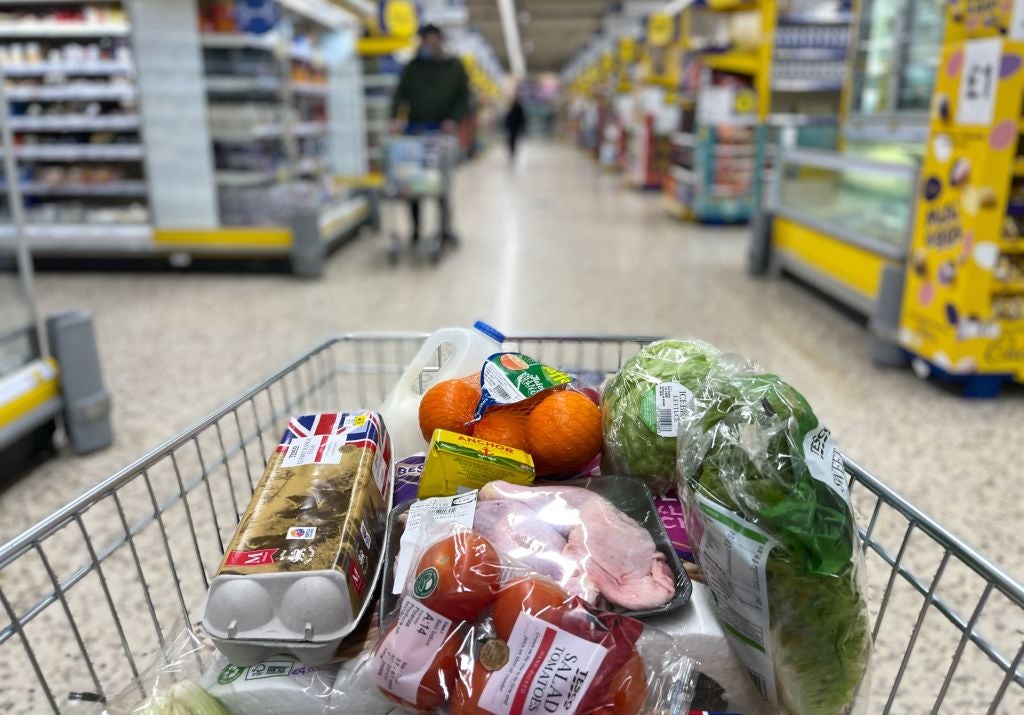
The IGD says UK retail food prices are now around 38 per cent above pre‑Covid levels, leaving households far more exposed to further price spikes.
Under this high‑impact scenario, the sharp rise in prices would be short‑lived but severe, with average food inflation of around 6.4 per cent across 2026, adding over £150 to the average household’s annual grocery bills.
Even in IGD’s baseline scenario which assumes no Middle East conflict, retail food inflation is forecast to average 3.8 per cent in 2026, implying that UK shoppers collectively would still need to find close to £10bn more to buy the same basket of food.
The new forecasts take into account the ongoing conflict in the Middle East, a key energy-producing region. The disruption is expected to impact food production directly, due to the energy-intensive nature of the supply chain, where oil and gas play critical roles at every stage.
James Walton, chief economist at IGD, said: “Even in the best case scenario, the conflict in the Middle East is likely to prolong the timeline for recovery from the cost of living crisis.”
He added that, despite high food prices, margins of profit for basic food and drink “remain exceptionally thin, and in many cases have fallen in recent years”.
“For example, margins on nine everyday food items average just 1.5 per cent across the supply chain, with items such as chicken breast sold at cost and beef mince generating under 1 per cent margin,” he said.
“When margins are this tight, businesses have limited capacity to absorb global shocks, invest in resilience or protect supply. Over time, that increases the risk of weaker availability and greater price volatility.”
