Why have interest rates stayed the same and what could happen next?

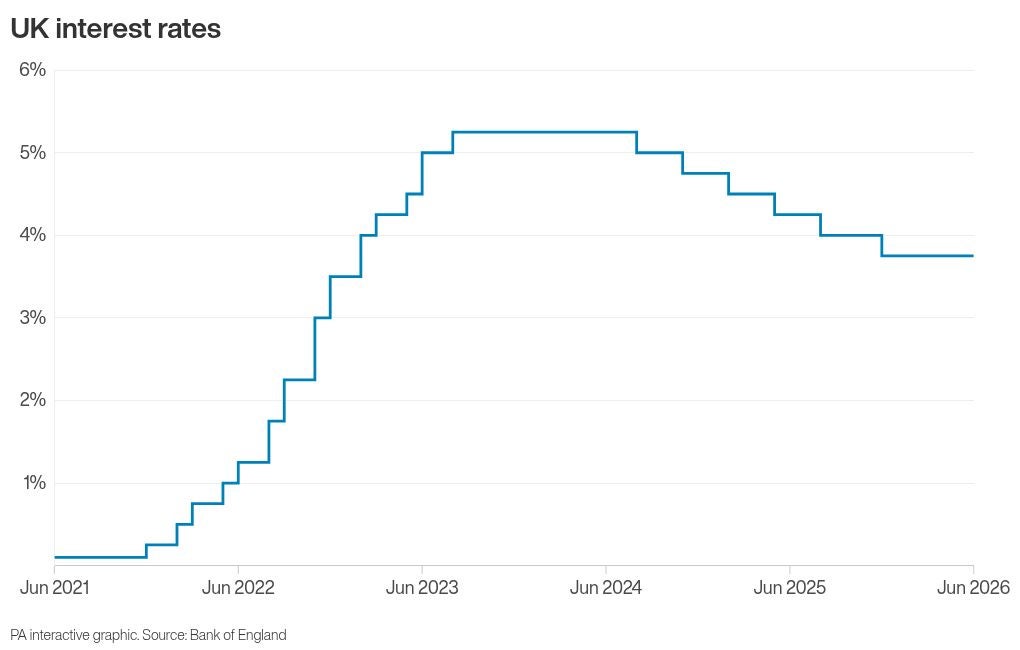
The Bank of England has kept interest rates unchanged at 3.75% in its latest decision on Thursday.
The Bank said it had made this decision after weighing up the different risks to the UK economy, especially the fallout of the Iran war on inflation.
But policymakers highlighted that there remained a lot of uncertainty about the outlook.
Here the Press Association looks at what drove the Bank’s decision and what it means:
– What happened to interest rates on Thursday?
The Bank decided to keep rates unchanged at 3.75%.
Seven members of its Monetary Policy Committee (MPC), who set rates, voted for hold, while two members – Megan Green and the Bank’s chief economist Huw Pill – called for an increase to 4%.
It is the fourth meeting in a row where rates have been held at this level, having previously been gradually coming down from a peak of 5.25% in August.
– What does it actually mean?
The base rate helps dictate how expensive it is to take out a mortgage or a loan.
Many lenders started increasing rates sharply following the outbreak of the Middle East conflict, but they have been lowering them again in recent weeks as sentiment in the market started to become more positive.
Savings rates are also linked to the interest rate so are unlikely to change.
– What is happening with inflation in the UK?
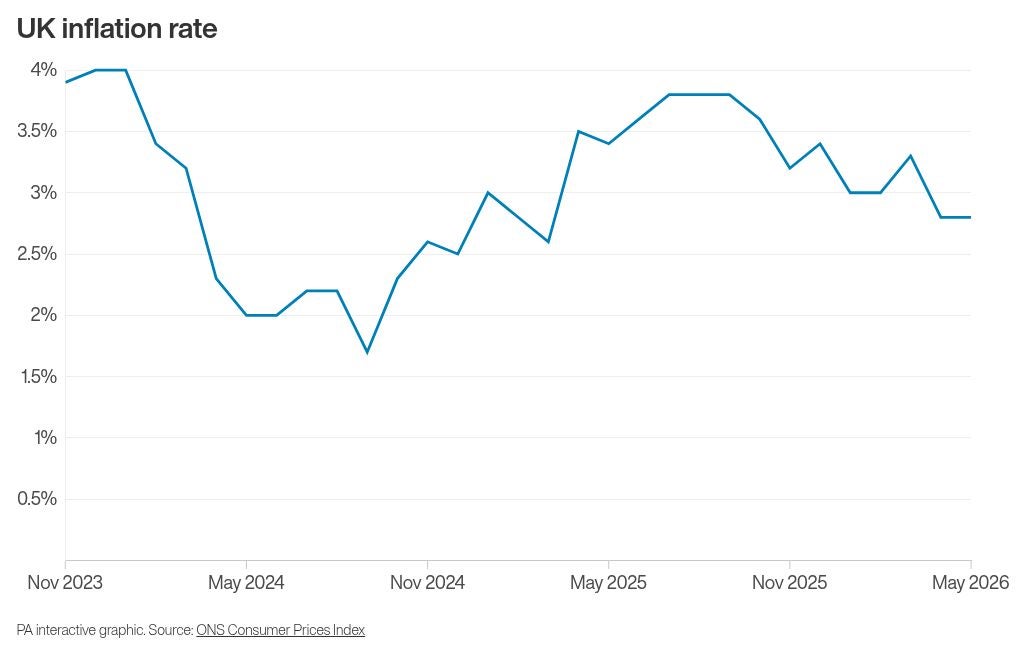
The Bank uses interest rates as a tool to control inflation to a target of 2%.
The latest official figures showed the rate of Consumer Prices Index (CPI) inflation stayed at 2.8% in May, the same as April, meaning it remains above the Bank’s target.
Nevertheless, this was better than most economists had been expecting for the month, with a reduction in food and drink inflation suggesting that the pressure on households may be less than feared.
However, UK inflation is expected to get higher in the coming months.
This is mainly because household energy bills are set to rise on the back of the US-Israeli’s war with Iran, which has restricted the supply of oil and therefore sent global prices soaring.
– What has the Bank of England said about the Middle East energy shock?
The Bank of England took into consideration the fact that oil prices had been falling back down in recent days thanks to US president Donald Trump announcing that a peace deal had been agreed with Iran.
Governor Andrew Bailey said it was “encouraging”, but he also stressed that inflation was already likely to still rise because of the previous damage.
He also emphasised that the situation was unpredictable and there was a risk that energy prices stay higher for a longer period of time.
– Will interest rates have to rise?
Many economists are now expecting interest rates to stay as they are for the rest of the year.
James Smith, developed market economist for ING, said he was predicting a “prolonged pause” before interest rate cuts resume in 2027.
Matt Swannell, chief economic adviser to the Item Club, said the Bank was in “wait-and-see mode” over the inflation outlook, and agreed that it would likely keep rates on hold for the rest of the year.
However, some members of the MPC have made it clear that they think interest rates should be increased.
Ms Green and Mr Pill, who were in the minority for voting for a rate hike, said they were more concerned about uncertainty around the UK inflation outlook and the volatility of energy prices, despite the new ceasefire agreement.
