Oil prices fall back sharply on renewed Iran war ceasefire hopes

Oil prices have retreated below 90 US dollars a barrel as a pause in fighting between the US and Iran boosted hopes of rekindling a peace deal and reopening the vital Strait of Hormuz.
The cost of benchmark Brent crude dropped 8% to 87.55 US dollars a barrel at one stage in ongoing heightened volatility in oil and gas markets caused by the Middle East conflict.
Oil had touched 100 dollars last week on renewed hostilities between the US and Iran.
But prices have eased back on renewed hopes of a resolution, with a pause in attacks for three days in a row and mediators in neighbouring countries looking to get the US and Iran back to the negotiating table.
It follows nearly two weeks of escalating attacks, sparked by Iran’s firing at ships trying to pass through the Strait of Hormuz, which is a crucial waterway for global oil and gas shipments.
Nearly a fifth of global crude supplies were previously carried through the strait and its closure has sent oil prices rocketing.
The US and Iran signed an interim peace deal in April, but this quickly fell apart as negotiations collapsed, causing oil costs to spike higher once more.
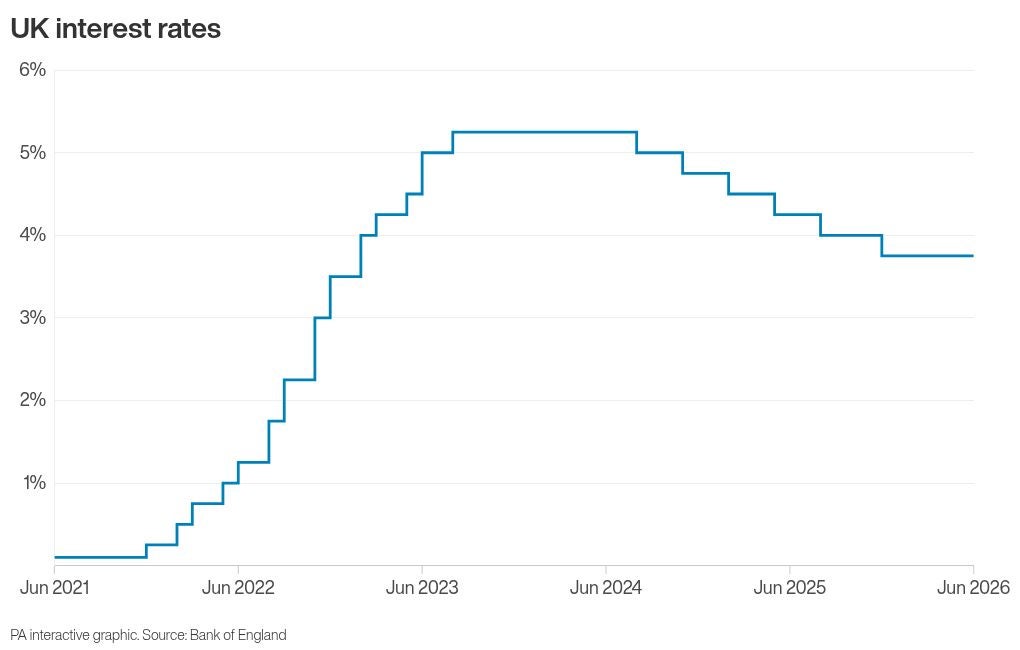
Russ Mould, investment director at AJ Bell, said Bank of England policymakers may get some breathing space if oil prices remain lower and reduced inflation worries.
The next interest rate decision is due on Thursday and is widely expected to see the Bank vote to hold at 3.75%.
Mr Mould said: “Ever since the initial peace deal on 8 April, markets’ core view has been that military escalation had ended, with the result that de-escalation was next and a settlement the ultimate conclusion.
“That in turn underpinned expectations for a retreat in oil back to the 70 dollars a barrel mark, where it lay before the initial American and Israeli strikes in late February.
“If this situation does come to pass, it may give central banks some breathing room on the inflation front.”

But Bryn Jones, head of fixed income at Rathbones Asset Management, said reopening the strait will remain key to keeping oil prices in check.
He said: “Traffic through Hormuz remains a mess, while the conflict has continued into the Red Sea where Iran-backed Houthi forces allegedly launched attacks against Saudi energy infrastructure around Jizan and Yanbu over the weekend.
“This prompted retaliatory Saudi strikes.”
“We can’t ignore the fact that the Strait of Hormuz and the Red Sea are putting pressure on prices globally – and do create inflation,” he cautioned.
