Governments should target cost-of-living support to poorer households – IMF

Want to bookmark your favourite articles and stories to read or reference later? Start your Independent Membership today.
Join today
Already a member?
Log in
Cost-of-living crises weigh heavier on poorer families and erode the affordability of everyday essentials, meaning governments should prioritise targeted over broad-based support measures, an influential global organisation has said.
It is increasingly important for policymakers to understand how to respond to these shocks and protect vulnerable households, the International Monetary Fund (IMF) said in a newly-published chapter of its world economic outlook.
When inflation surges, the prices of basic necessities like food, transport and energy can rise sharply – such as following Russia’s invasion of Ukraine in 2022 and the escalation of conflict in the Middle East this year.
Even temporary spikes in these costs can have a long-lasting impact on lower-income families who devote a larger share of their spending on everyday essentials than wealthier households.
Prices have risen sharply over the past five years and the global economy is becoming more exposed to geopolitical tensions, climate change and other supply shocks, the IMF said.
Governments and central banks should therefore look to targeted and temporary support measures as the “most effective and cost-efficient way to protect poorer households when prices for basics spike”.
“Assistance, when warranted, should be temporary and delivered primarily through income-support measures directed at the most vulnerable households, ideally using existing social protection systems that can be scaled up rapidly,” the report read.
This compares to broad-based measures like cutting taxes, capping prices or providing generalised subsidies.
In “exceptional circumstances”, such as where there are significant concerns about food security or risks of social unrest, support may need to extend beyond the poorest households, it said.
The findings from the IMF – a Washington-based fund with 190 member countries – comes as Prime Minister Andy Burnham has pledged to prioritise cost-of-living support for households.
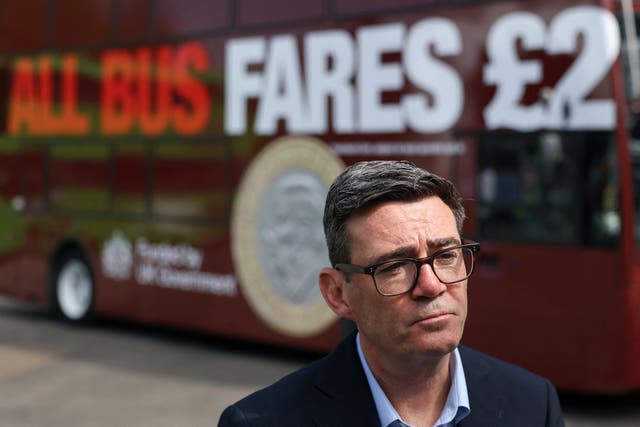
He has already introduced measures such as cutting VAT on energy bills this winter, capping bus fares at £2 and lowering business rates for pubs, social clubs and live music venues.
The IMF is due to publish its full world economic outlook report next week.
