Inflation holds steady at 2.8% as food price rises ease

UK inflation unexpectedly flatlined last month as a slowdown in food price rises offset pressure from airfares, according to official figures.
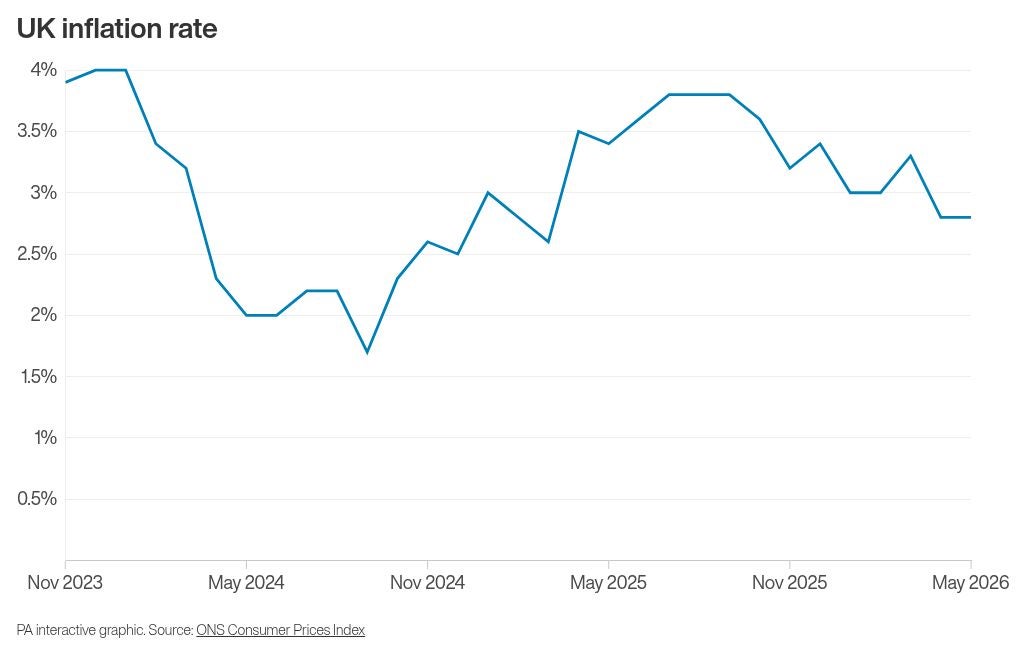
The Office for National Statistics (ONS) said Consumer Prices Index (CPI) inflation was recorded at 2.8% in May, the same rate as in April.
It was lower than expected by economists, who had predicted an uptick in inflation to 3%.
It means the price of goods and services is still increasing, but at the same speed as in April.
ONS chief economist Grant Fitzner said: “After last month’s slowdown, inflation held steady in May as various price movements offset each other.
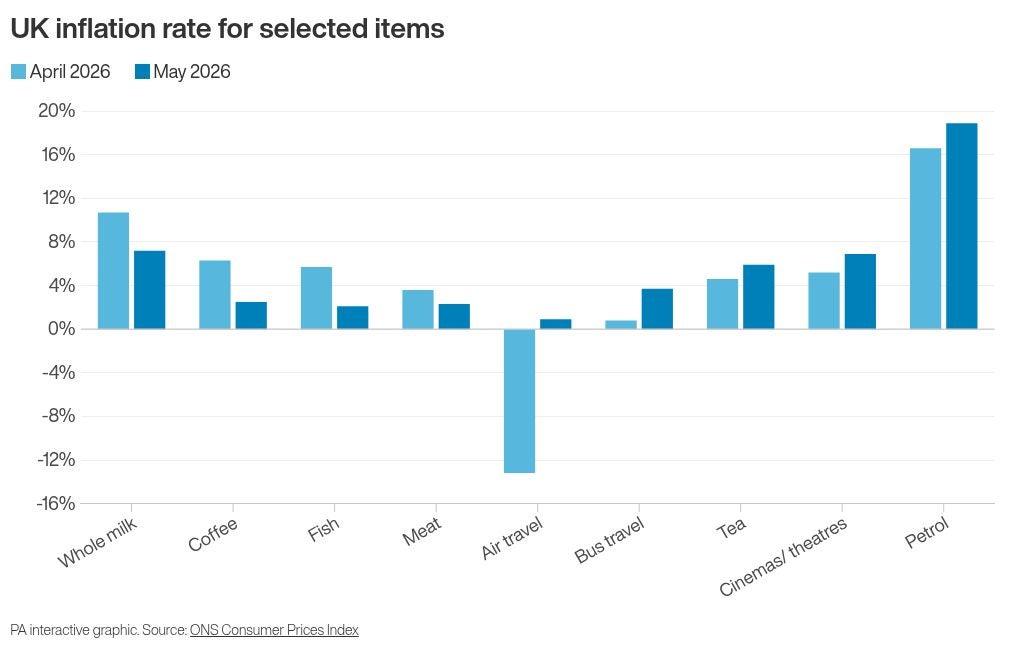
“The main upward movement came from transport with airfares, vehicle taxes and petrol prices all pushing up inflation.
“These were offset by lower food prices, with decreases in inflation seen across a range of meat, dairy and vegetable items compared to last month, as well as the cost of domestic heating oil, which fell back after climbing in recent months.”
The steady rate of inflation for May means that it remained at the lowest level since March 2025, despite pressure from the Middle East conflict on prices.
Household energy prices have remained depressed after a lower Ofgem energy price cap came into force in April.
However, the fresh data showed further upward pressure on fuel costs.
The average price of petrol rose by 0.6 pence per litre between April and May, rising to 157.4p per litre for the month.

This marked the highest price November 2022, when fuel prices were pushed sharply higher following the Russian invasion of Ukraine.
More expensive motor fuel contributed to elevated transport inflation, which lifted to 6.8% for May – the highest level since November 2022.
However, the largest catalyst for sharper transport inflation was increased airfares, which increased by 10.3% month-on-month, largely linked to the early timing of Easter and the school holidays.
There was also upward pressure from car duty, statisticians said.

Meanwhile, higher transport costs were partly offset by a slowdown in price rises for food and non-alcoholic drinks.
Food and drink inflation eased to 2.2% from 3% in April, falling to its lowest level since December 2024.
The ONS highlighted that it was linked to downward pressure from meat, particularly beef and ham, and dairy products including cheese.
The flat rate of monthly inflation comes despite widespread expectations that inflation will accelerate over the coming months, as the impact of the Iran war feeds further into the economy.
Bank of England forecasts have predicted that inflation will rise as high as 3.6% later this year in even its most benign scenario regarding the conflict.
Chancellor Rachel Reeves said: “While the war in the Middle East pushes prices up globally, we have got the right economic plan and inflation has held steady.
“We’re protecting families and businesses from rising costs, with cuts in energy bills and freezes in fuel duty and rail fares.”

The latest data comes ahead of the Bank of England rate-setting committee’s latest interest rate decision on Thursday.
ING’s James Smith said the steady inflation rate questions “the need for rate hikes”, predicting that inflation is currently on track to peak at around 3.5%.
Economists have also indicated that the recent dip in oil prices, linked to a potential deal between the US and Iran, could result in a slower rise in inflation than previous predicted.
Sanjay Raja, chief UK economist at Deutsche Bank, said: “The sting from the Iran conflict looks less than markets initially assumed.
“The peak in CPI could end up well below what we saw last year. This could give the Bank of England some pause for thought.”
