A zero-waste approach that works for real people

Zero Waste Foundation is a Business Reporter client
Why preventing and reducing food loss and waste across agrifood systems needs practical, everyday solutions.
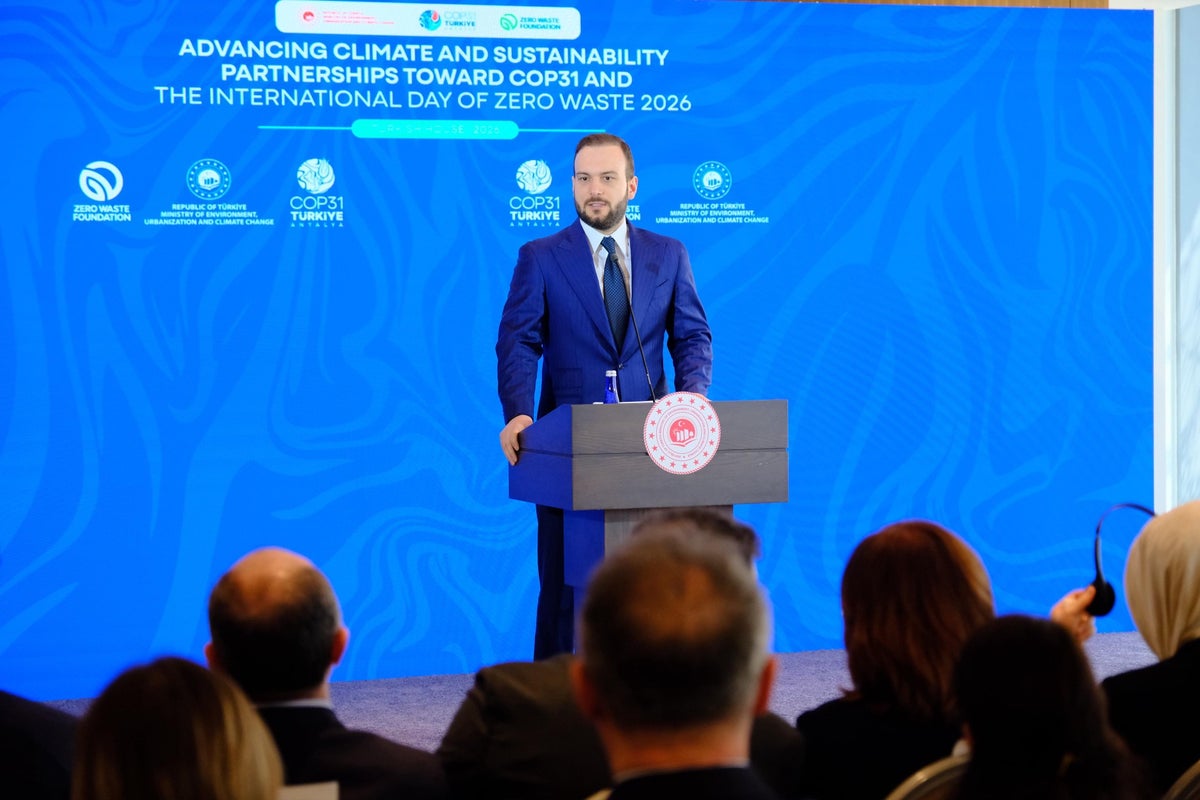
On 30 March 2026, the global community marked the fourth observance of the International Day of Zero Waste. In 2022, Türkiye, together with over 100 co-sponsoring countries, spearheaded the resolution at the United Nations General Assembly, establishing the International Day of Zero Waste.
The day was unanimously adopted to focus on promoting sustainable consumption and production patterns and advancing a circular economy to minimize waste and reduce its environmental and human health impacts. Unsustainable consumption and production patterns and practices are at the heart of the environmental crisis we face today. This year’s focus on food makes this case clear.
Nearly one-fifth of all the food available to us ends up being wasted, from shops and restaurants to our own homes. That amounts to around one billion meals thrown away every single day, even as nearly 800 million worldwide people go hungry. And that’s not all. Another 13 per cent of food is lost after it’s harvested, while it’s being stored, transported and distributed, before it even reaches the shops.
Hunger today is not simply about a lack of food. In fact, the world is producing more than enough to feed everyone. But when food is lost or wasted at every stage, it becomes one of the root causes of hunger worldwide.
Food waste is also a global challenge. It’s not just a problem of rich or poor countries. In higher-income countries, more waste happens in homes, restaurants and shops. In lower- and middle-income countries, more food is lost earlier in the supply chain, often because of gaps in storage, transport and infrastructure. But what’s striking is that, per person, households waste similar amounts of food everywhere.
Food loss and waste generate up to 10 per cent of global greenhouse gas emissions. That is around five times the total emissions from the aviation sector. When food is thrown away and ends up in landfills, it produces methane, a greenhouse gas that is far more potent than carbon dioxide in the short term.
Beyond emissions, food loss and waste also mean wasting all the resources used to produce that food, from farmers’ labour and land to water and energy. Some estimates suggest that a land area larger than China is used each year to grow food that is never eaten. This puts immense pressure on ecosystems and contributes to biodiversity loss, with nearly one-third of the world’s agricultural land used to produce food that is ultimately lost or wasted.
Tackling food loss and waste is crucial in not just maximising the use of food produced. It is also the key to fighting food insecurity and enabling healthy diets. Reducing food waste is the most cost-effective and achievable climate solution. It will contribute to reducing greenhouse gas emissions, preserving biodiversity and promoting resource efficiency. Food waste alone offers a mitigation potential of up to 14 per cent of global methane emissions. Research has suggested that for every $1 invested in food loss and waste reduction, a $14 return can be achieved.
Zero-waste approaches offer a way forward by embracing a circular economy and fostering innovation. They encourage us to look at the entire agrifood system through the entire chain, focusing first on preventing and reducing loss, and then on reusing and repurposing food to tackle the waste challenge.
Along this journey toward circularity, zero-waste approaches also create opportunities for new jobs, improved livelihoods and financial benefits across the value chain.
A zero-waste approach shifts the focus away from simply expanding agricultural land or producing more food. Instead, it asks a more pertinent question: how can we feed more people while wasting less of what we already produce?
It starts by reducing the pressure to convert more land into agriculture, which helps protect biodiversity and vital carbon sinks. Biodiversity underpins our food systems. It supports our soil, our water, our weather and even the air we breathe. Yet today, our global agrifood systems are among the main drivers of biodiversity loss.
A zero-waste approach means strengthening the capacities of farmers and improving infrastructure so food can be grown, handled and stored more efficiently, with less loss and better yields. Imagine what a farmer could do with the right skills to store harvested crops properly, along with access to affordable water- and air-tight storage.
It also requires improving supply chains, from storage and transport to how food is handled in markets. Simple steps such as training workers in proper food handling or making small adjustments in processing can make a big difference.
At the same time, it calls for changes in our daily habits. Planning meals, storing food properly, using leftovers and donating surplus food can all help reduce waste. And instead of sending food waste to landfills, a zero-waste approach promotes composting or using it as fertiliser or animal feed, so that its value is returned to the system.
Waste, in general, and food waste in particular, is a climate issue, not only a sanitation or pollution issue. Zero waste is also about resource efficiency and more sustainable and equitable consumption. It means preventing waste, keeping materials in use and recovering value instead of discarding it.
Zero waste solutions are practical and scalable today. From prevention and redistribution to composting, anaerobic digestion and improved collection and separation, these solutions are already within reach. Waste is one of the few climate issues people can see directly in their homes, restaurants, markets and cities.
People do not experience climate change as a 1.5 degree target or distant projections for the year 2100. They experience it through hunger, water shortages and growing waste that affects health and livelihoods. These challenges are connected, and so are their solutions. Climate action becomes real when it improves daily life, from farms to households to cities. That is why a zero-waste approach offers a practical and immediate way forward.
