Amazon’s delivery box is changing and so is online shopping

Want to bookmark your favourite articles and stories to read or reference later? Start your Independent Membership today.
Join today
Already a member?
Log in
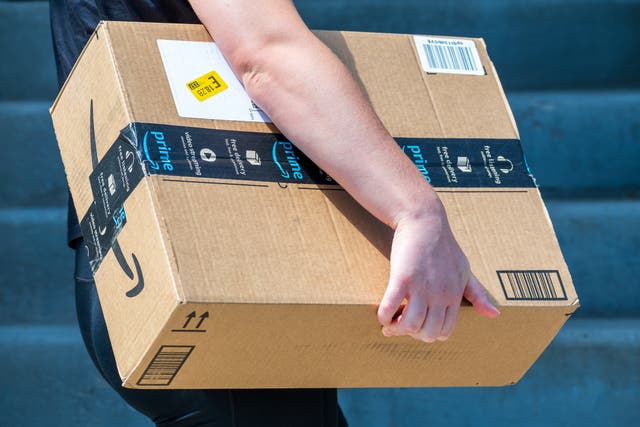
As afternoon draws to a close, stacks of brown cardboard packages of various sizes gather in lobbies. Marked by the distinctive curved smile stretching from “A” to “Z”, each parcel signals a commercial empire built on promises of endless choice and instant satisfaction.
The Amazon delivery box, a familiar presence on suburban doorsteps and urban corridors alike, represents more than simple cardboard. It symbolises a modern consumer culture where orders are expected within hours or, in a growing number of cities, in under 30 minutes. Behind every delivery lies a vast logistical network of warehouse workers and automated sorting robots, alongside fleets of trucks, vans, bicycles and drones bringing items directly to doorsteps.
This level of speed marks a stark departure from a few decades ago, when immediate purchases required travelling to a local shop. Mail-order catalogue options existed, but deliveries routinely took at least a week to arrive.
Amazon swiftly reshaped those consumer expectations. Launched from founder Jeff Bezos’s garage as an online bookshop in July 1995, the company expanded into CDs, DVDs, toys and clothing, evolving into “the everything store”.
In 2005, Amazon transformed online retail by introducing two-day shipping for Prime members. Since then, delivery times have steadily contracted. This year, the company is rolling out 30-minute delivery, with Amazon noting that over 300 million items across more than 35 categories now qualify for free Prime shipping in the US.
E-commerce should account for 17.4% of U.S. retail sales this year, or $1.4 trillion, according to research firm eMarketer. Amazon commands 40% of the U.S. online market, ahead of No. 2 Walmart at 11.4%, according to the firm. This comes as Amazon evolves into not only an e-commerce juggernaut but a major force in cloud computing and artificial intelligence.
As Amazon rapidly expands, it’s rolling out a series of innovations to make its packaging lighter, tighter and easier to recycle, according to Pat Lindner, the company’s vice president of mechatronics and sustainable packaging. Amazon is also moving away from single-use plastic packaging. Amazon reduced the share of its North American shipments that use single-use plastic packaging from 65% in 2023 to 27% in 2025.
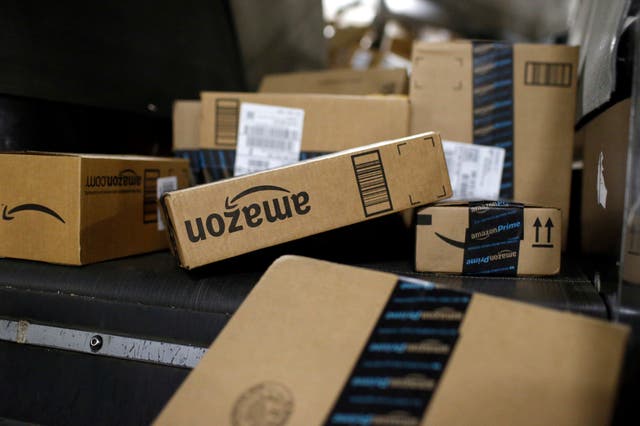
Moreover, Amazon is reducing the number of its trademark boxes it uses.
Now, about 11% of the company’s global orders are shipped in their original manufacturer packaging without adding extra boxes or envelopes, Amazon says. And last year, more than half weren’t sent in a box — they were either delivered in their original packaging or flexible packaging.
Still, the box won’t go away, Lindner says. “The box will always be important,” he says, “and we’ll continue to innovate to meet the customer’s needs.”
