Britons drive sales of radios, cassettes and CDs to cut screen time – report

Want to bookmark your favourite articles and stories to read or reference later? Start your Independent Membership today.
Join today
Already a member?
Log in
British households are driving the “analogue revival” with demand for radios, vinyl, cassettes and CDs in an effort to cut screen time, figures suggest.
A report by electronics brands Pure and TEAC said consumers appeared to be shifting towards wanting to enjoy music “without constant notifications and endless scrolling”.
Some 52% of Gen Z – or those currently aged 14 to 29 years old – have created dedicated listening spaces at home, while almost a quarter (23%) actively put their phone out of reach when listening to music, a survey for the report found.
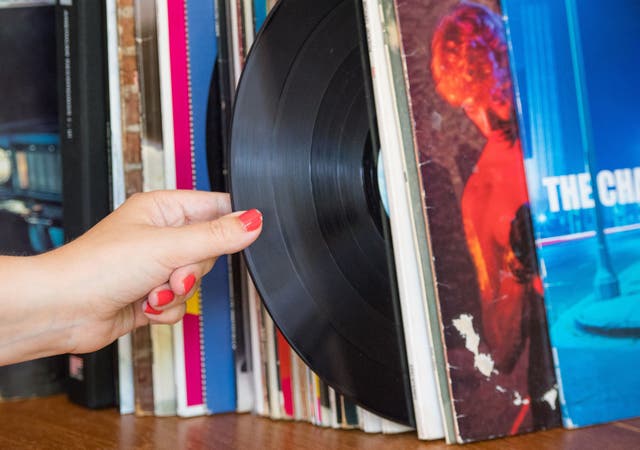
The study found that consumers are driving sales of vinyl, cassettes and “retro-inspired” radios as a reflection of their personality, with nearly half (48%) of Gen Z saying they would consider buying a modern cassette player.
Some 60% of those in their 60s and 70s say radio keeps them company without a screen.
Pure said it had responded to the trend with its Classic Active, an all-in-one audio system designed to cut out the “complexity” of traditional hi-fi, and most recently the Evoke Home II, a radio with a slot for CDs.
Pure chief marketing officer Hubert Eiter said: “Radio has never really left the home, but the reasons people value it are evolving.
“For some it’s familiarity, for others it’s calm, design and ease of use. What unites them is that radio still creates an atmosphere without distraction.”
The digital (DAB+) radio market in the UK grew by 5.5% last year, according to figures from GfK.
Overall, the UK is the second-largest radio market in Europe, after Germany – boosted most recently by the Government’s advice to households to have a battery or wind-up option to hand in case of emergencies.
Pure said sales of its Elan One2 – the only Pure radio that can be operated with standard AA batteries – spiked by 7,360% on a regular October after the Government’s preparedness announcement on October 22.
Almost 75% of UK radio listening now takes place on digital or online platforms rather than FM and AM.
Rajar (Radio Joint Audience Research) said 51.1 million adults, or 87% of the adult UK population, tuned in to their selected radio stations each week in the second quarter of 2026.
On average, a listener tunes in to 20.3 hours of live radio per week.
There are more than 180 stations broadcasting on DAB+ in the UK, including some 50 national stations, with more than 90% of the country now able to receive DAB digital radio.
