Burnham’s housing dream under threat amid housebuilding crisis

Andy Burnham’s ambition to transform Britain’s housing market are under threat as the housebuilding industry faces its toughest conditions since the financial crisis, with developers grappling with rising costs, weakening demand and higher borrowing costs.
The new prime minister has argued that a radical expansion of social and affordable housing is essential to tackling the chronic housing shortage, and has repeatedly called for greater public investment and powers to build at scale.
But the economic backdrop confronting ministers and developers suggests delivering those ambitions will be far from easy.
The latest figures paint a sobering picture. England saw 208,600 new homes built in 2024/25, a 6 per cent fall on the previous year and the lowest annual total since 2015/16, highlighting the scale of the challenge facing Labour’s pledge to deliver 1.5 million homes during this Parliament.
While Homes England reported more than 40,000 homes were completed through its own programmes in 2025/26 – four in five of them affordable homes – broader housing supply remains well below the pace needed to meet the government’s targets. Since Labour entered government in July 2024, around 392,400 net additional homes have been delivered, leaving ministers running at roughly two-thirds of the rate required to hit their goal by 2029.
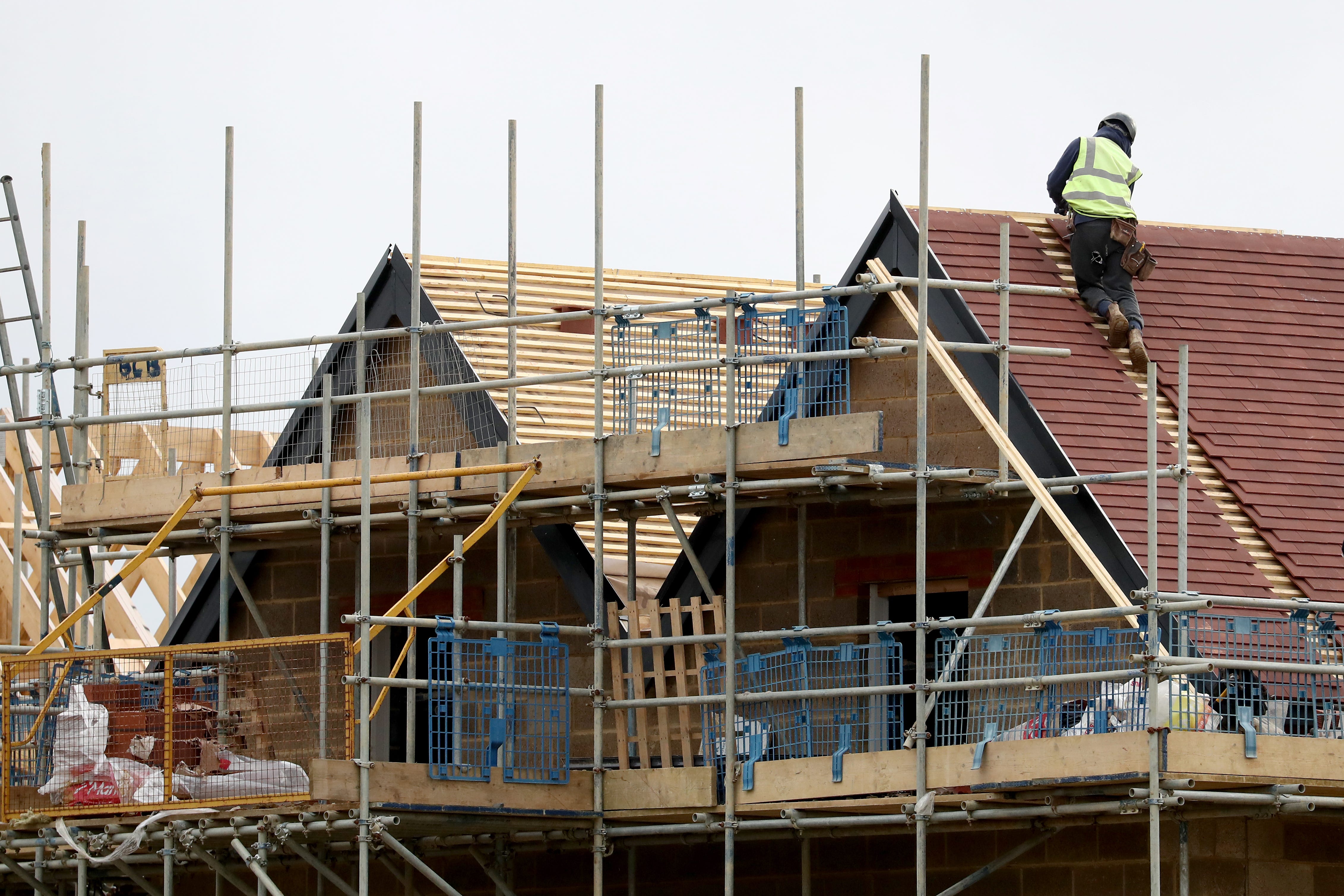
The pressure is being compounded by a deteriorating commercial outlook for housebuilders, amid higher mortgage costs and lingering uncertainty over interest rates.
Housebuilders’ strife
Britain’s biggest listed housebuilders are issuing profit warnings at a rate not seen since the global financial crisis, underlining the severity of the downturn gripping the sector.
According to EY-Parthenon, home construction companies issued eight profit warnings during the first half of 2026, matching the level recorded during the first half of 2008 and marking the highest total since the Covid pandemic.
Since 2020, UK-listed housebuilders have issued 47 profit warnings – almost double the number recorded during the previous 13 years combined.
The consultancy says developers are being squeezed by a combination of:
- higher labour, materials and energy costs
- tighter financing conditions
- weaker consumer confidence
- planning delays and regulatory complexity
- persistent skills shortages
- slowing demand across the wider housing market
Tim Vance, restructuring partner at EY-Parthenon, said many firms had entered 2026 expecting falling interest rates to revive demand, only to be hit by renewed economic uncertainty.
Developers have increasingly relied on incentives such as deposit contributions and mortgage support schemes to secure sales, but those incentives have further eroded already-thin profit margins.
The warnings are already translating into weaker financial results.
Crest Nicholson has just swung from a profit to a £35.2m pre-tax loss and cut its earnings outlook, citing weaker consumer confidence and slower housing market activity. Estate agent Foxtons has also warned that subdued demand is likely to leave profits millions of pounds below previous expectations.

Mortgages
Even if more homes are built, many prospective buyers face a very different affordability landscape from just a few years ago.
Mortgage rates remain significantly higher than those available during the ultra-low interest rate era, leaving households facing sharply higher repayments when fixed-rate deals expire.
More than one million homeowners are expected to remortgage this year, with many moving from fixed deals of around 2 per cent to rates above 5 per cent.
For some borrowers, monthly repayments are expected to double.
Mortgage adviser Lorna Hopes, of Smith and Pinching, says the impact extends well beyond first-time buyers.
“When households suddenly find hundreds of pounds more each month going towards their mortgage, they tend not to move home. They stay put, spend less elsewhere and that slows activity across the wider housing market.”
The effect is particularly acute for buyers who purchased their first property five years ago and still require high loan-to-value mortgages, limiting access to the cheapest deals.
Meanwhile, average mortgage pricing remains elevated. Moneyfacts data this week showed average two-year and five-year fixed homeowner mortgage rates hovering at around 5.5 per cent, despite some lenders making modest reductions in recent weeks.
Interest rates
The Bank of England has eased monetary policy from its recent peak, but borrowing costs remain well above the levels that fuelled the housing boom of the late 2010s.
Earlier hopes that interest rates would fall rapidly this year have faded following renewed geopolitical tensions and stubborn inflationary pressures.

Those expectations matter because housing transactions are driven as much by confidence as by affordability.
Higher mortgage pricing has weighed heavily on first-time buyers, who accounted for more than half of all purchase mortgages last year but are also the most sensitive to changes in borrowing costs because they typically borrow close to their maximum affordability.
Peter Stimson, director of mortgages at MPowered Mortgages, says first-time buyers remain “the key to the property market”, with knock-on effects across furniture, home improvements and the wider economy.
He believes mortgage rates could gradually ease if inflation remains under control and the Bank of England begins cutting rates again next year, potentially bringing more buyers back into the market.
But for now, many households continue to delay purchases.
Burnham’s housing dream
Against that backdrop, Burnham’s vision of dramatically increasing housebuilding faces formidable obstacles.
The new Labour leader has argued that Britain needs a new generation of social housing and has repeatedly called for greater powers and funding to accelerate development, particularly in his former patch of Greater Manchester.
His proposals are aimed at addressing a structural shortage that has developed over decades and improving affordability for younger households locked out of home ownership.
However, even if planning reforms succeed in unlocking more land, developers still face weaker demand, higher financing costs and squeezed profit margins that make new projects less attractive commercially.
The mismatch illustrates one of the biggest dilemmas facing Labour’s housing agenda: political ambition alone cannot overcome economic headwinds.
Without stronger consumer confidence, lower mortgage costs and healthier balance sheets across the construction sector, delivering the scale of housebuilding needed to meet Labour’s targets—and the wider ambitions championed by Burnham—will remain an uphill battle.
The danger for ministers is that Britain’s housing shortage continues to worsen just as the industry needed to solve it enters one of its most difficult periods since the financial crash.
