Fake AI voice impersonating Secretary of State Marco Rubio contacts foreign ministers and US officials

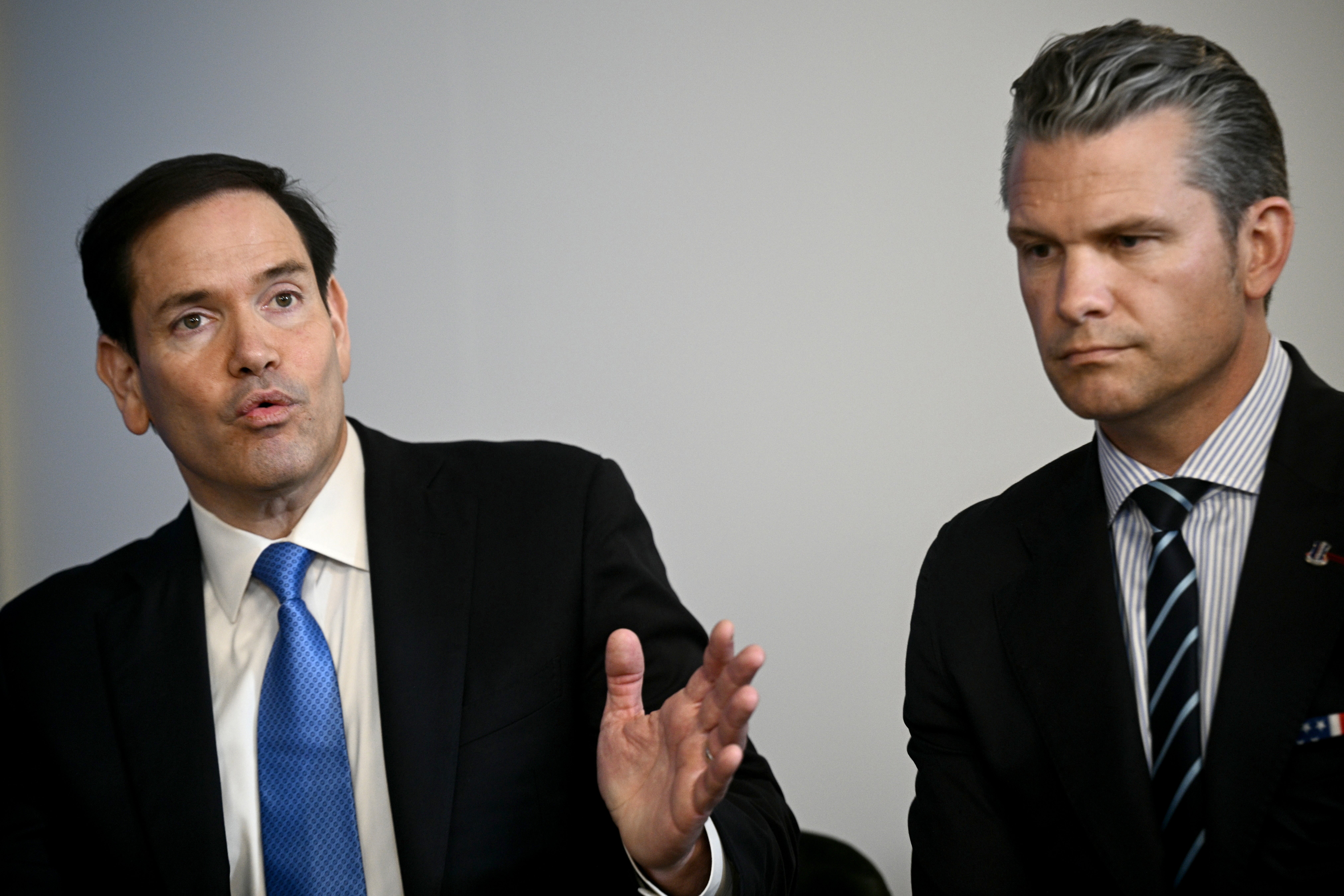
An imposter used a fake AI voice impersonating Secretary of State Marco Rubio to contact senior U.S. officials and foreign ministers, according to a report.
The security breach involved voicemails, sent via the Signal messaging app, and text messages to “at least five non-Department individuals, including three foreign ministers, a U.S. governor, and a U.S. member of Congress,” a diplomatic cable, obtained by The Washington Post, stated.
The impostor, whose identity is unknown to U.S. authorities, was able to mimic Rubio’s voice and writing style using AI-powered software, an unnamed senior official told the newspaper.
The Independent has contacted the State Department for comment.
Authorities believe the impostor was attempting to manipulate government officials “with the goal of gaining access to information or accounts,” the State Department’s cable, dated July 3, said.

“The actor left voicemails on Signal for at least two targeted individuals and in one instance, sent a text message inviting the individual to communicate on Signal,” the cable also said.
In mid-June, the impostor created a Signal account under the display name: “Marco.Rubio@state.gov,” which is not a real email address.
The State Department said it was currently investigating.
“The Department takes seriously its responsibility to safeguard its information and continuously takes steps to improve the department’s cybersecurity posture to prevent future incidents,” a senior State Department official told The Independent. The official said no further details of the incident could be shared, citing the ongoing investigation and “security reasons.”
White House chief of staff Susie Wiles was the target of another impersonation attempt in May after her phone was breached. An impostor got hold of Wiles’s contacts and sent messages and calls to high-profile contacts. “Nobody can impersonate Susie. There’s only one Susie,” President Donald Trump said at the time.
The Rubio security breach took place in the wake of the Signalgate scandal, where a journalist was inadvertently added to a group chat with military leaders and members of the Trump administration. In that group chat, which included Rubio, Defense Secretary Pete Hegseth shared minute-by-minute plans of sensitive military operations in Yemen.
Hegseth also shared details of an upcoming military strike in Yemen in a second Signal chat group which included his wife, brother and personal attorney, a report the following month revealed.
It later emerged that the President’s former National Security Adviser, Mike Waltz, had added Jeffrey Goldberg, editor-in-chief of The Atlantic, to the group.
“I take full responsibility. I built the group,” Waltz said at the time. “It’s embarrassing. We’re going to get to the bottom of it.”
Waltz was ousted from his national security role, which has been taken up by Rubio in the interim. Waltz is due to appear before the Senate next week for his confirmation hearing to be named U.S. ambassador to the United Nations.
Security experts have warned against using Signal to discuss government business and while the app is encrypted, it can be hacked. In a 2023 memo, the Defense Department prohibited the use of Signal and other messaging apps, including WhatsApp and iMessage, when discussing non-public information.
