Inflation set to have cooled in June ahead of household energy squeeze

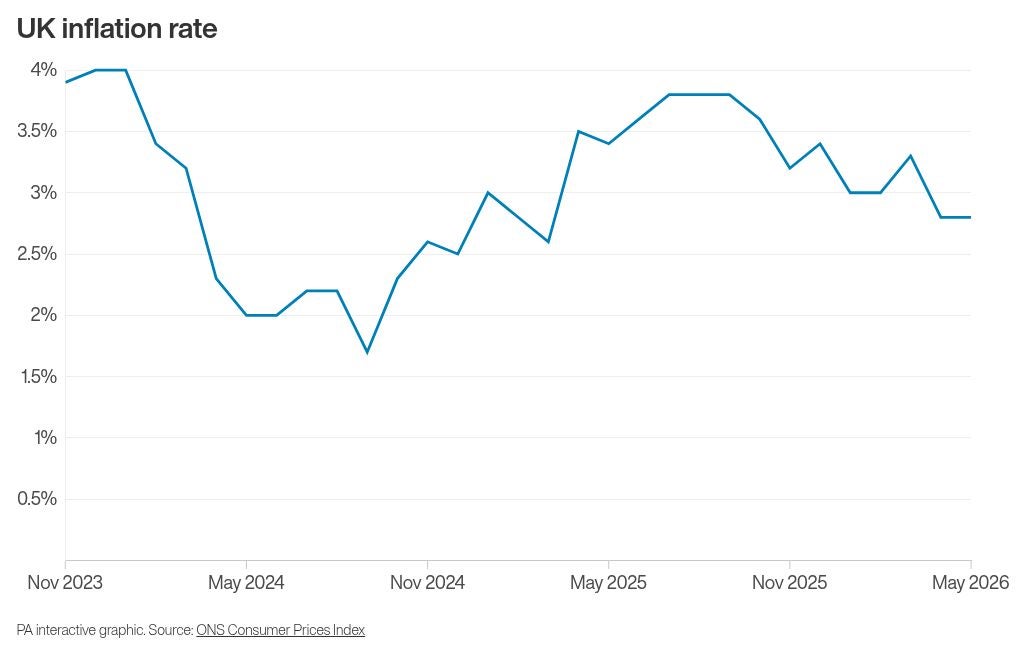
UK inflation is set to have eased last month in a temporary boost for the new Prime Minister ahead of a jump in the household energy price cap.
Official figures for June’s Consumer Prices Index (CPI) will be published on Wednesday, two days after Andy Burnham took the reins and formed a new Cabinet.
Most economists think a sharp drop in petrol and diesel prices will have helped pull the overall inflation rate down to 2.7% in June, from 2.8% in May.
The RAC said the average price of a litre of diesel at UK forecourts dropped by more than 16p from the start to the end of June – the largest fall since records began in 2000.

This was driven by news of an interim ceasefire deal between the US and Iran, prompting oil prices to fall below pre-crisis levels.
Economists are also expecting inflation across the UK’s services industry to have slowed in June, although live music events like Harry Styles and Take That concerts may have pushed prices up in certain places.
Household energy inflation is expected to have taken a step down last month, but economists are viewing this as temporary relief before Ofgem’s new energy price cap took effect at the beginning of July.
The latest cap was up by 13% compared with the previous rates, meaning the typical household’s gas and electricity bill will increase by £221 to £1,862 a year.
Tensions in the Middle East have also flared again and Brent crude oil prices have been rising during July.
Mr Burnham announced on Tuesday that electricity bills will be VAT-free from October 1, saving households about £45 a year as part of the new Prime Minister’s promise to ease cost-of-living pressures.
Cutting VAT from 5% to 0% is estimated to reduce CPI inflation by around 0.1 percentage points when it comes into effect, according to the Government.
Thomas Pugh, chief economist at RSM UK, said falling oil prices after the interim ceasefire agreement will be the “main drag on inflation in June”.
“However, oil prices have rebounded in July as tensions escalate which means inflation is still likely to peak at around 3.4% in November,” he said.
He cautioned that food prices could “rebound later this year, as higher energy and fertiliser prices due to the conflict in the Middle East make their way through supply chains”.
Sanjay Raja, chief UK economist for Deutsche Bank, said to expect a “bumpy path” ahead.
“While we’re nowhere close to the peaks seen during the height of the Iran conflict, the energy disinflation path remains uncertain,” he said.
He also warned that food price rises could be on the horizon.
