Surging energy prices push inflation up to highest level since March
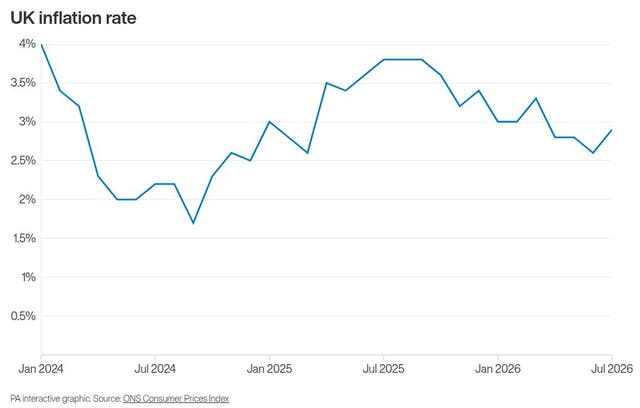
UK inflation has jumped to its highest rate since March after energy prices were pushed up by the Iran war, according to official figures.
The Office for National Statistics (ONS) said Consumer Prices Index (CPI) inflation rose to 2.9% in July, up from a 15-month low of 2.6% in June.
It follows a 13% hike in Ofgem’s energy price cap last month, which increased the average gas and electricity bill by £221 to £1,862 a year.
The ONS said the rise in the cap was driven by the biggest rise in gas prices for almost four years.
Chancellor John Healey said the Iran war “continues to impact prices here at home”.
He added: “We have cut VAT on electricity bills and capped bus fares at £2 – to give breathing space to those feeling the strain.
“There is more to do to restore hope and build a stronger economy.”
There are concerns that inflation is set to keep rising as the conflict sends energy costs even higher over the winter months, and as the hot weather damages crops and puts food costs under pressure.
Ofgem will announce the next price cap level for October to December on August 26, with the latest forecasts on Wednesday from experts at Cornwall Insight showing a 4% rise is expected, taking the average tariff to £1,941.
The ONS said the steep rise in the July to September energy cap, which follows a jump in wholesale gas prices, was only partly offset by last month’s lower crude oil costs, which had fallen sharply month-on-month in July amid hopes of a resolution to the Middle East conflict.
Crude oil has since rocketed back up above 90 US dollars a barrel as the war shows no sign of ending and the crucial Strait of Hormuz shipping route – through which a fifth of the world’s oil and gas supplies is normally carried – remains closed.
Mike Hardie, deputy director for prices at the ONS, added: “Other upward pressures included furniture prices falling by less than usual for this time of year, and also a smaller fall for clothing prices due to reduced discounting.”
The latest data also showed Retail Prices Index (RPI) inflation rose to 3.2% last month from 3% in June, a key figure, with the July rate used to calculate next year’s train fare increase.
Last November, the then-chancellor Rachel Reeves announced that rail fares in England would be frozen in 2026, the first such freeze for 30 years, but it is unclear if the Government will extend this for a second year.

Shadow chancellor Sir Mel Stride said the Iran war was not only to blame for rising inflation.
He said: “Labour’s tax rises and business bashing have driven the cost of living higher and higher, yet Andy Burnham refuses to rule out yet more tax hikes at the Budget.
“Labour’s economic mismanagement has left us unprepared for global shocks, with the UK having the highest inflation in the G7 at the start of the Iran crisis. It is ordinary people who are left paying the price.”
The latest ONS data also showed inflation including housing costs, CPIH, rose to 3.1% in July from 2.8% in June.
Economists said the inflation rise would be watched closely by the Bank of England, but that it was likely to keep interest rates on hold when it next meets in September.
James Smith at ING forecasts CPI to peak at 3.2% in the winter, but said the “bar for a Bank of England rate hike remains high”.
“We continue to see the Bank of England keeping rates on hold this year, before resuming rate cuts next spring,” he said.
