The hidden problem behind UK job vacancies hitting a five-year low

Want to bookmark your favourite articles and stories to read or reference later? Start your Independent Membership today.
Join today
Already a member?
Log in
Unemployment levels remain high in the UK and a bigger issue is the falling number of available jobs, which has hit a five-year low point.
Small and medium-sized businesses (SMEs) do the majority of hiring in the UK, so while individually they have little impact on the job market, as a whole they can determine the health of the economy.
SME firms account for around 60 per cent of jobs according to the ONS, and vacancies are the lowest they have been for five years. Many SMEs feeling they cannot afford to hire more staff is putting a big strain on the nation’s finances.
The rise in employer National Insurance, brought in by the previous chancellor Rachel Reeves, has long been pointed to as a hindrance to hiring.
Current chancellor John Healey has the opportunity to ease the tax burden on small businesses in his upcoming Budget. Whether he takes it is far from certain – but business leaders and owners of small firms alike are calling for change.
Small business hiring costs on the rise
Many small business owners will be holding out hope of some relief to their cost burden will be found in the chancellor’s upcoming Budget.
Antonia Medlicott, founder of financial education specialists Investing Insiders, is among them. She said many small businesses are still struggling from changes made in the last two Budgets.
“I started Investing Insiders three years ago,” she said. “We employ several people, we pay PAYE, National Insurance, Corporation Tax and VAT, and we’ve never once asked for a handout.
Everything you need to build, launch and grow online
LEARN MORE
ADVERTISEMENT
Everything you need to build, launch and grow online
LEARN MORE
ADVERTISEMENT
“But in October 2024, Rachel Reeves’ Autumn Budget outlined changes to National Insurance contributions. Since April 2025, every business in this country pays 15 per cent National Insurance on its staff, up from 13.8 per cent. Not only that, but businesses also need to start paying sooner, kicking in once someone earns £5,000 a year, down from £9,100.”
Ms Medlicott added that Employment Allowance also rose to £10,500, which did help the smallest firms, but noted that the moment the business grows and starts hiring, especially into the double digits, “every penny of it” is felt.
“We’re told to grow, to hire, to invest, and every time we do, the bill for doing the right thing gets bigger.”
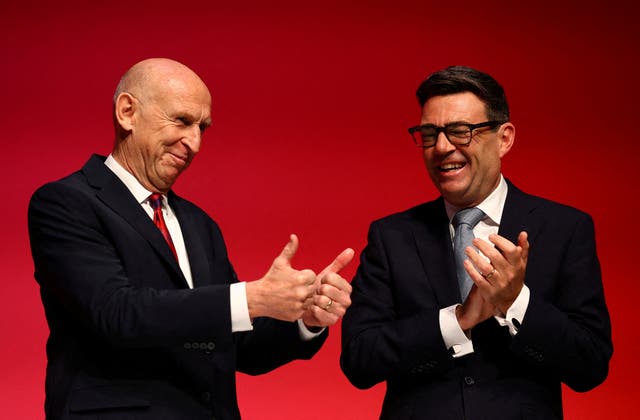
The 99 per cent call to Andy Burnham and John Healey
Ms Medlicott said a “staggering” 99.2 per cent of all businesses in the UK are classed as small or micro businesses, which equates to around 5.65m of them.
These businesses employ more than 13m people and generate £1.9tn for the UK economy.
“Small businesses aren’t a line in a spreadsheet,” she said. “We’re the cafe where you know the owner’s name, the accountant who picks up the phone, the local firm that gave someone their first job.
“It’s because of this that I’m not asking for warm words. I’m asking for a budget that makes it cheaper for businesses to grow, employ people, and keep the UK economy’s backbone strong.
“I urge small business owners to continue to speak out about the impact that these budgetary decisions have on them, as it’s the only way that the government can fully understand the ripples that they can have throughout our communities.
“It’s not fair that large businesses continue to flourish whilst small businesses are prevented from achieving the growth they need to survive.”
A bakery’s struggle
Ms Medlicott is far from alone in battling the costs of doing business. Posting on Instagram, the owner of Wilma’s Bakery, a chain of coffee and cake shops in Essex, expressed similar sentiment.
“With the Budget fast approaching, to say small business owners are feeling a little twitchy would be an understatement,” the firm said through the account.
Directly addressing Healey and Burham, the owners noted politicians have been having some very serious conversations about growth with founders and bosses from Revolut, Starling, Octopus Energy, HSBC, Morrisons, BP, Shell, BT, Vodafone, Rolls-Royce and BAE Systems – but that less-known firms had been excluded.
“Government absolutely should listen to big businesses. But erm… Could somebody pull up a little chair for us too?” they said.
“How do we keep employing people when the cost of employing them keeps rising?
“How do we invest in another shop, better equipment or more training when there’s less and less left to reinvest?
“How do we keep prices affordable while VAT, rates, wages, energy and ingredients keep taking bigger bites?”
The post, which attracted hundreds of interactions and comments, including from other small business owners in the same boat, asked governments not to stop listening to big businesses, but to “listen to the thousands of little businesses trying to build something too.”
“Because small businesses don’t just want help to survive. We’d quite like the chance to grow too,” it finished.
The Independent has reached out to Wilma’s for comment.
