Used EV sales jump 67% as Britain’s second-hand car market gets its spark back
Britain’s used car market has returned to growth, with electric cars providing much of the extra spark as used EV sales jumped by 67 per cent.
More than two million used cars changed hands between April and June, according to new figures from the Society of Motor Manufacturers and Traders (SMMT). The total of 2,009,318 transactions was up 0.7 per cent on the same period last year.
It was the first time since 2021 that second-quarter sales had passed the two million mark, leaving the market just 1.2 per cent below its pre-pandemic level. That small rise helped to make up for a slight fall during the first three months of the year. In total across the first half of 2026, 4,025,550 used cars found new homes, an increase of 0.2 per cent.
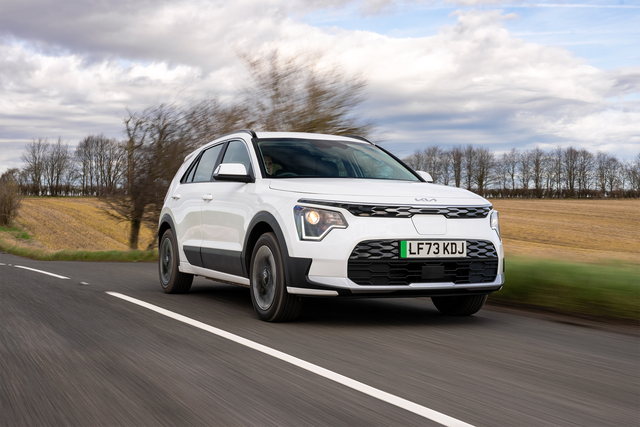
The biggest movement came from fully-electric cars. A total of 110,761 used EVs changed hands during the quarter, up 67 per cent and representing the strongest quarterly growth since the start of 2024. Electric cars also took a record 5.5 per cent share of the used market. That means more than one in every 18 second-hand car buyers chose an EV, compared with around one in 30 during the same period last year, when their share stood at 3.3 per cent.
It’s still a relatively small slice of Britain’s enormous used car market, but the direction of travel is clear: more electric models are reaching the second-hand market as cars originally bought or leased new are traded in, giving used buyers a broader range of ages, sizes and prices to choose from.
Growth was especially strong during April, when used EV transactions more than doubled with a 110.9 per cent rise. They increased by 57.6 per cent in May and 37.8 per cent in June. SMMT said the sharp rises in April and May coincided with higher fuel prices linked to the conflict in the Middle East. The figures were also compared with a weaker period last year, when changes to vehicle excise duty came into force.
Regular hybrids had a busy quarter too. Sales rose by 31.2 per cent to 130,825, lifting their share of the market from 5 per cent to 6.5 per cent. Plug-in hybrids didn’t join the growth, however. Transactions fell by 6.8 per cent to 22,856, leaving them with 1.1 per cent of all used car sales, down slightly from 1.2 per cent a year earlier.
Despite the rapid rise in electric and hybrid sales, petrol and diesel cars remain comfortably dominant. Together, they accounted for 86.7 per cent of all transactions during the quarter, or almost nine out of every 10 used cars sold. Petrol was still the country’s favourite fuel type, with 1,121,243 cars changing hands, although that figure was down by 1.2 per cent. Diesel transactions dropped by 7.2 per cent to 620,045, reflecting the falling number of new diesel cars feeding into the used market.
Mike Hawes, SMMT chief executive, said: “A return to growth is good news for motorists and the wider automotive sector, with sales of used EVs rising particularly strongly as more choice reaches more buyers. As the used market is where most people buy their cars, plentiful and affordable supply is vital, however, increasingly unrealistic targets in the new car market risk constraining that supply and pushing up costs. Urgent regulatory reform is needed to deliver a transition that works for every driver.”

Smaller cars continued to rule the used market. Superminis accounted for 31.7 per cent of all transactions, with sales edging up by 0.2 per cent. Lower-medium cars, another familiar source of everyday hatchbacks and family models, followed with a 26.6 per cent share and the same 0.2 per cent rise. Dual-purpose cars including SUVs recorded the strongest growth, climbing by 7.4 per cent to take 17.7 per cent of the market.
Used car buyers weren’t feeling especially adventurous when it came to colour. More than 1.1 million of the cars sold during the quarter were black, grey or white, with the three shades accounting for 56.5 per cent of the market. Sales of black cars rose by 0.7 per cent, grey increased by 4.1 per cent and white was up by 4.7 per cent. Blue remained the fourth most popular colour despite a 1.1 per cent decline, while silver held on to fifth place even as sales fell by 6.4 per cent.
