Which historic building in Manchester is known as the birthplace of the modern cooperative movement?

The historic building in Manchester known as the birthplace of the modern cooperative movement is the Rochdale Pioneers Museum, located in nearby Rochdale, part of Greater Manchester. Although not in Manchester city centre itself, the site is inseparably linked to Manchester’s industrial and social history and is widely recognized worldwide as the origin point of modern cooperativism.
The museum is housed in Toad Lane, where in 1844 the Rochdale Equitable Pioneers Society was founded by a group of 28 skilled workers, including weavers, shoemakers, and artisans. These workers were responding to harsh conditions created by the Industrial Revolution—low wages, poor-quality goods, and unfair trading practices. Their goal was simple but revolutionary: to create a business owned and run by its members, for their mutual benefit rather than private profit.
What made the Rochdale Pioneers so influential was not just the shop they opened, but the principles they established. Known today as the Rochdale Principles, these ideas included democratic member control (one member, one vote), open membership, fair distribution of surplus, transparency, and education. These principles became the foundation of cooperative organizations across the world and continue to guide cooperatives today.
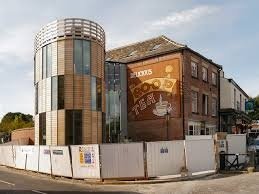
The building itself was modest—a small shop selling basic goods such as flour, butter, sugar, and candles—but its impact was extraordinary. The success of the Rochdale store proved that cooperatives could thrive even in difficult economic conditions. As the model spread, cooperative societies appeared across Britain and eventually internationally, influencing industries such as retail, banking, housing, and agriculture.
Manchester played a crucial role in amplifying the cooperative movement. As a major industrial and political hub in the 19th century, the city provided the networks, printing presses, and meeting spaces that helped cooperative ideas spread nationally and globally. Cooperative leaders frequently met in Manchester, and the city became a center for cooperative education, governance, and activism.
Today, the Rochdale Pioneers Museum preserves the original shop and tells the story of how ordinary working people reshaped economic and social thinking. It is recognized by the International Co-operative Alliance as a global heritage site and attracts visitors from around the world interested in social justice, fair trade, and democratic business models.
In conclusion, the Rochdale Pioneers Museum at Toad Lane is known as the birthplace of the modern cooperative movement because it represents the moment when workers successfully challenged exploitative systems through collective ownership and democratic control. Its legacy extends far beyond Greater Manchester, shaping cooperative practices in over 100 countries and proving that economic systems can be both fair and sustainable.
